Rants about food, because we just can't let things go.

Eat right, stay brilliant.

Tuesday, 16 July 2013

Ode to Thins

The Rude Health Thins are great for dunking in hummus, slathering with peanut butter or snaffling bare naked, straight from the pack. But the fun doesn't have to stop there. At Rude Health HQ the Thins have provided an accompaniment to numerous lunches and it's fair to say, we're hooked. Paired with chunks of soft avocado,  smoked makerel pate, leftover curries and hearty soups or just when you need a little something extra.

To show just how versatile these tasty little Thins can be, I decided to share with you my top five Thins-inspired recipes...

1. Thins with Goats Cheese & Piccalilli

Veg, No Nuts, Wheat Free, Gluten Free
60 mins plus overnight prep.

Ingredients
1 Cauliflower, cut into small florets

2 Courgettes, diced
1 Carrot, diced
1 handful of small silver-skinned onions, peeled and halved
1 handful of Green beans, cut into short lengths
(adjust veg quantities to your liking)
2 handfuls of Sea salt
3 heaped tablespoons flour
1 tbsp turmeric
1 tbsp ground cumin
1 tbsp English mustard powder
400 ml cider vinegar
1 tsp ground ginger
1 tbsp mustard seeds

Method

1. Place all the vegetables in a bowl, add the salt and cover with water. Leave overnight, covered with a plate.

2. Heat a saucepan big enough for all the veg and add a splash of oil. Fry the mustard seeds, cumin, turmeric, ginger for half a minute.

3. Reduce the heat and add the mustard powder, flour and a splash of vinegar and stir into a paste. Add the sugar, then gradually add the remaining vinegar and 100ml water, stirring into a smooth paste and simmer for 2 minutes.

4. Remove the pan from the heat. Drain the vegetables and rinse with cold water. Carefully stir the vegetables into the spicy sauce.

5. Pour the mixture into sterilised jars and seal the lids tightly. Leave for at least two weeks before opening.

6. Serve with a slab of Goats Cheese, piled on Rude Health Multigrain Thins.


2. Oaty Thins with Cream Cheese & Salsa

Veg, No Nuts
15 mins
Ingredients
4 tomatoes, chopped
1 red onion, finely chopped
1 tbsp jalapeño peppers from a jar, drained and finely chopped
2 garlic cloves, crushed
1 small bunch of coriander, roughly chopped
1 lime

Method

1. Stir all the ingredients together in a medium bowl with some seasoning.

2. Serve at room temperature with Rude Health Oaty Thins.


3. Corn Thins with Guacamole and Salsa

Veg, Wheat Free, Dairy Free, Nut Free, Gluten Free
10 mins
Ingredients
1 Large tomato
3 Ripe avocados
1 Lime
Handful of chopped coriander
1 Small red onion, finely chopped
1 Red chilli, de-seeded and finely chopped

Method

1. Use a large knife to pulverise the tomato to a pulp on a board, then tip into a bowl. Halve and stone the avocados and use a spoon to scoop out the flesh into the bowl with the tomato.

2. Tip all the other ingredients into the bowl, then season with salt and pepper. Use a whisk to roughly mash everything together. Scatter with the coriander and then serve with Rude Health Corn Thins.


4. Rice Thins with Honey Spiced Figs and Greek Yoghurt

Veg, No Nuts, Wheat Free, Gluten Free
15 mins

Ingredients
3 tbsp Honey
4 Figs, quartered
1/2 tsp Cinnamon
1/2 tsp Ginger
150g Greek Yoghurt

Method
1. Pour the honey and  spices and figs into a small bowl and sit over a pan of simmering water over. Stir to blend the spices and heat for 1-2 minutes until honey is warm and syrupy. 
2. Top the Rice Thins with a dollop of greek yoghurt, figs and a drizzle of honey. Serve immediately.

5. Multigrain Thins with grilled Halloumi, Aubergine and Pepper.

Veg, No Nuts, Wheat Free, Gluten Free
15 mins 
Ingredients
2 tbsp Extra Virgin Olive oil
1/2 Aubergine cut into round slices
1 Pepper, cut into strips
1 block Halloumi, cut into thick slices
Pinch of sea salt
Rude Health Multigrain Thins
Method
1. Add a dash of olive oil to a non stick frying pan and gently fry the pepper strips for 5-10 minutes. In a large bowl toss the aubergines in olive oil, sea salt and a little water. 
2. Add the aubergine rounds to a large  pan and fry until golden brown on either side. Set aside on a plate and cover with kitchen towel.
3. Add a dash of oil to the large pan and arrange the halloumi slices in the pan. Fry for around 30 seconds on either side or until they start to turn golden brown.
4. Arrange the peppers, aubergine and halloumi in stacks on Multigrain thins and enjoy!


Feeling Thins-inspired? Got some recipes you would like to share? Send them to us on FB, Twitter or to hello@rudehealth.com for your chance to feature on our new recipe page.

Until next time...

Monday, 24 June 2013

The elusive oatcake.


We would like to thank Seb Emina & Malcomb Eggs, authors of the 'The Breakfast Bible' for inspiring this blogpost and letting us borrow this fantastic recipe. We've added a Rude Health twist. 


Nobody knows how the Staffordshire oatcake really came about. It tastes nothing like its Scottish counterpart. In fact the Staffordshire sort has changed my perception of what an oatcake is meant to be. It has the texture of a moist crumpet/pancake amalgamation, and tastes seriously (deliciously) oaty.

Some say that the Staffordshire oatcake came from India? Apparently the men of the North Staffordshire Regiment developed a taste for chapattis during their time there. When the men returned, they tried to duplicate the chapattis they had enjoyed but using local ingredients–and the Staffordshire oatcake / ‘chapatti’ was born.

The more credible story is that when the Industrial Revolution arrived, there was a boom in the number of hungry potters in the Stoke-on-Trent area so rural cooks had to make the most of the local Pennines oats.

The exact recipe varies between oatcake shops and was for many years a closely guarded secret. There would be an oatcake shop on nearly every street corner years ago. Not just selling the oatcakes but also hot filled oatcakes. The sale of these flat oaten pancakes became a thriving industry, with oatcakes being sold out of holes in the walls of city kitchens. This was British street food before the Golden Arches came about.

Nowadays the Staffordshire dinner-plate-sized oatcake is very hard to find, but it is possible to make a good approximation at home, using wholemeal flour, fine-ground oatmeal, yeast, water and milk.

It seemed obvious to try and incorporate Nick’s oatmeal into this recipe. Finding and developing recipes with which we can use our foods has become a bit of an obsession here at Rude Health. We have come up with quite a few and are sharing them all on our new recipe page.

To get you started, here’s the Rude Health version of the Staffordshire Oatcake using no more than five ingredients. ♯counton1hand


This recipe makes 6 oatcakes

Ingredients

110g Rude Health Oatmeal

110g wholemeal flour

½ teaspoon salt

½ teaspoon sugar

3.5g (a half sachet) dried instant yeast

210ml warm milk

210ml water


Method

1.     Mix all the dry ingredients in a large bowl, and add the liquids.

2.     Whisk until you have a smooth batter the consistency of double cream. It will seem a little thin, but the oatmeal will swell, making it thicker.


3.     Leave it covered with a clean tea towel in a warm place for 1 hour, until the batter is thick and frothy.

4.     Heat a heavy-based frying pan over a medium heat, and coat the surface of the pan with oil, using a piece of kitchen paper to wipe off any excess.

5.     Add one ladle of mixture, and tilt the pan so that it is evenly spread. Cook for 2–3 minutes on a medium heat, until the surface is covered in bubbles and the underside is brown. Flip and cook for another 2–3 minutes. Keep an eye on the heat, as the oatcakes need to cook through without burning.


6.     Serve hot, rolled around the filling of your choice. If you have any spares they will reheat well between two plates over a pan of boiling water.


Wednesday, 19 June 2013

Not all sugars are the same.


Lusting after crisps? Unwrapping a mars bar ice cream with greed in your eyes? Licking the cream spoon and smiling with pleasure? You’re not alone, or unusual. Man is genetically coded to seek out, gorge and hoard these three fundamental building blocks for life - sugar, salt and fat. This is because they have, historically, been difficult to find, or costly to acquire/grow/nurture, or only very seasonally available. So we’re highly sensitive to their taste, their smell and their after effects…in short we’re sugar, salt and fat junkies. 

Happily, for 99.9% of our time on this earth, humans have had to accept their lot, and work around these cravings within local, regional, seasonal and cultural circumstances, so as to build time-honoured healthy traditional diets based on generations of trial and error. However, of the holy trinity of desire let’s not forget that in the natural world, salt and fat are usually much easier to obtain than sugar. Which is why the craving for sweetness is so overwhelmingly powerful. Until very, very recently the only sources of concentrated sugar were wild, primarily honey and tree syrups, and of course the naturally occurring sweetness from the sugars within fruits and vegetables. Concentrated sugar was therefore scarce, highly seasonal and/or unknown to most of the world until about 500 years ago, when sugar cane growing and processing rapidly evolved into a global trading phenomenon.

Sugar cane is indigenous to SE Asia, and it is thought that the peoples of present day India discovered that by cooking the sugar cane juice – still a common street vendor refreshment in India today – you create a stable (sugar is a preservative), solid, easy to handle and ship, block of intense sweetness – which they call jaggery. We now know this as unrefined cane juice sugar. Similar unrefined cane juice sugars are also produced in central and south America. Aside from narcotics, jaggery was perhaps the first easy to transport and store international trade commodity, which is a rather amusing parallel, as studies show that refined sugar is more addictive than cocaine.

Jaggery was the start of the rot, in more ways than one. The insatiable desire for this sweet opiate swept through the Islamic world into Europe, and with the conquistadors went sugar cane, as production switched to the Caribbean and the Americas, creating not only immensely rich sugar empires but also the slave trade. If jaggery is the rough diamond of the sugar world, refined white sugar is its distant cousin far removed. Refined white sugar is now the most widely traded and consumed form of sugar. It was created with typical ingenuity – for the pursuit of personal and corporate profit - with the complete disregard for the well being of the citizen. Refined white sugar is easy and cheap to produce from both sugar cane and sugar beet, homogenous (looks clean and perfect), remains stable, is quick dissolving, a great preservative, and has a super long shelf life. Sugar is a highly addictive substance, so for the big food companies, the production of cheap refined sugar is a licence to print money, legally. Humans love it, so give them more. And more. And more. In sneakier ways. Sugar has been a glorious ally to the proliferation and popularity of prepared, convenience foods. One of the earliest partnerships was sugar and tomatoes. Before refrigeration, Heinz discovered that fresh tomato puree lasted longer and was made seductively moreish when produced with added refined sugar. Say hello to Heinz Ketchup – the first of the many sweetened refined foods that we adore. 

The sugar honeymoon has been sweet and long lasting for big food – Heinz Ketchup has been an international food since 1907 - and you’ll be very surprised (or not) to find that refined sugar is found in so many rather unlikely foods, such as savoury ready meals, and even dried fruits. Why such a long honeymoon? Well, we do love sweet things, and also we’ve been so preoccupied with demonising fat (don’t get me going on this one) of late, that we’ve been ignoring the fact that despite a low fat dietary obsession, people are on average getting fatter…

Which is why I am writing this ranty blog – as I am sure I am not the only one to notice that the refined sugar honeymoon seems to be, at long last, losing its lustre. You know this is so when the lifestyle advisors in the tabloids feature not only low fat dietary guidance but also a sensationalist and evangelical anti sugar scoop within the same section. That’s good isn’t it? Well, yes and no. The demonising process is often, sadly, a rather all-embracing, crowd-pleasing selection of simple sweeping statements. (I should be a politician) Just as all FAT is bad, and makes you fat/die, so all SUGAR is now the really bad stuff that will make you spotty, blotchy, moody, bad tempered, fat, ill and of course, die. Get ready to be afraid and, of course, worried, about sugar. Here’s some cold turkey advice from the popular press for all of us sugar addicts (sinners): wine contains sugar, so that’s off limits. Honey? Bad. Tonic water? Switch to slimline. Diet fizzy drinks? Find your zero sugar fix out there. Careful: bread contains sugar so you jolly well can’t have any. 

This is absurd. But inevitable. Be ready for the sugar damnation brigade to take over, and for the low sugar or sugar-free sweeteners (natural like Stevia, or synthetic like sucralose) to take the moral high ground. But we will all suffer, as usual, from this simplistic evangelism. Just as not all fats are equal – there are good fats and bad fats – so sugar is not a homogenous substance. When produced naturally, used wisely and enjoyed in a time-honoured fashion, good sugar is one of life’s great pleasures. I love honey (from a small producer), organic maple syrup, rapadura sugar, coconut palm flower sugar and, of course, jaggery. Do I add them to my Bolognese sauce? No. To my stewed rhubarb? But of course. These are all wild or unrefined sugars to be appreciated and savoured, and used sparingly. They come complete with a complex, ever changing selection of nutrients, vitamins and minerals. Used in moderation, they not only give pleasure, but also health. And if you think I am about to be mortally afraid of good wine, you can think again, as I raise my glass to the simple pleasures of good sugars.


Please note that very little of this blog is original. The truth has been out there longer than you think. It’s just we’ve been too busy stuffing down low fat doughnuts to bother to listen. Please see, for instance, the 1975 book, Sugar Blues, by William Dufty. And for more startling insights into why all sugars are not equal, take a moment to study this nutritional comparison between unrefined cane juice sugar and refined sugars. 


Wednesday, 1 May 2013

Pillage and Porridge


We’ve had a busy April at Rude Health, with all sorts of exciting things under-way, and I’ve even been lucky enough to get away for not just one, but two holidays.

Over the long Easter weekend I escaped up to Northumberland, to spend time with rest of the Poples and to fill our lungs with the fresh country air. We spent the weekend trekking along Hadrian’s Wall and catching up over well-earned feasts. Up on the Wall (cue Game Of Thrones reference) the views were incredible, with nothing around us but wildlife and unusually for April - snow! It didn’t feel like spring was anywhere in sight. Unsurprisingly, we later found out that it was the coldest Easter on record.


We also paid a visit to the archaeological site of an ancient Roman military post, called Vindolanda.  At this ancient Roman town, so much has been uncovered that you can walk through the streets, into the old pubs and even set foot into a Pre-Hadrianic bathhouse. There was also a spectacular museum displaying their findings of perfectly preserved leather shoes, jewellery, armour and cutlery. The fork hadn’t been invented but the spoon had so they could fuel up on a hearty bowl of porridge before battle – thank goodness!


After just a few days back in the office, I was off again, this time to Bergerac, France. I was hoping to relax in the warmer weather with my family and indulge in cheese and wine aplenty. But things didn’t quite turn out as hoped - best-laid plans and all that. Instead, we were graced with all sorts of unexpected extras, which certainly made this holiday a memorable one!


On our first day, just after packing up the car with our week’s food, we suddenly realised that the keys to the car had been packed up, along with our food. Great start. There was talk of breaking a window to get to them, but fortunately, with sheer determination and a stroke of ingenuity, the situation was resolved without even a scratch on the car. How? Well, a magician never reveals her secrets.


After calming down from the afternoons excitements, we took the dog for an evening walk and had a hearty supper of Green Lentil and Merguez Sausage Casserole – delish. Unfortunately however, the key incident wasn’t the only ‘extra’ we had in store. The next day my mum, brother and I all woke up with flu. To follow that, the dog cut his foot open. My mum twisted her ankle. And the trailer broke. We weren’t having much luck!

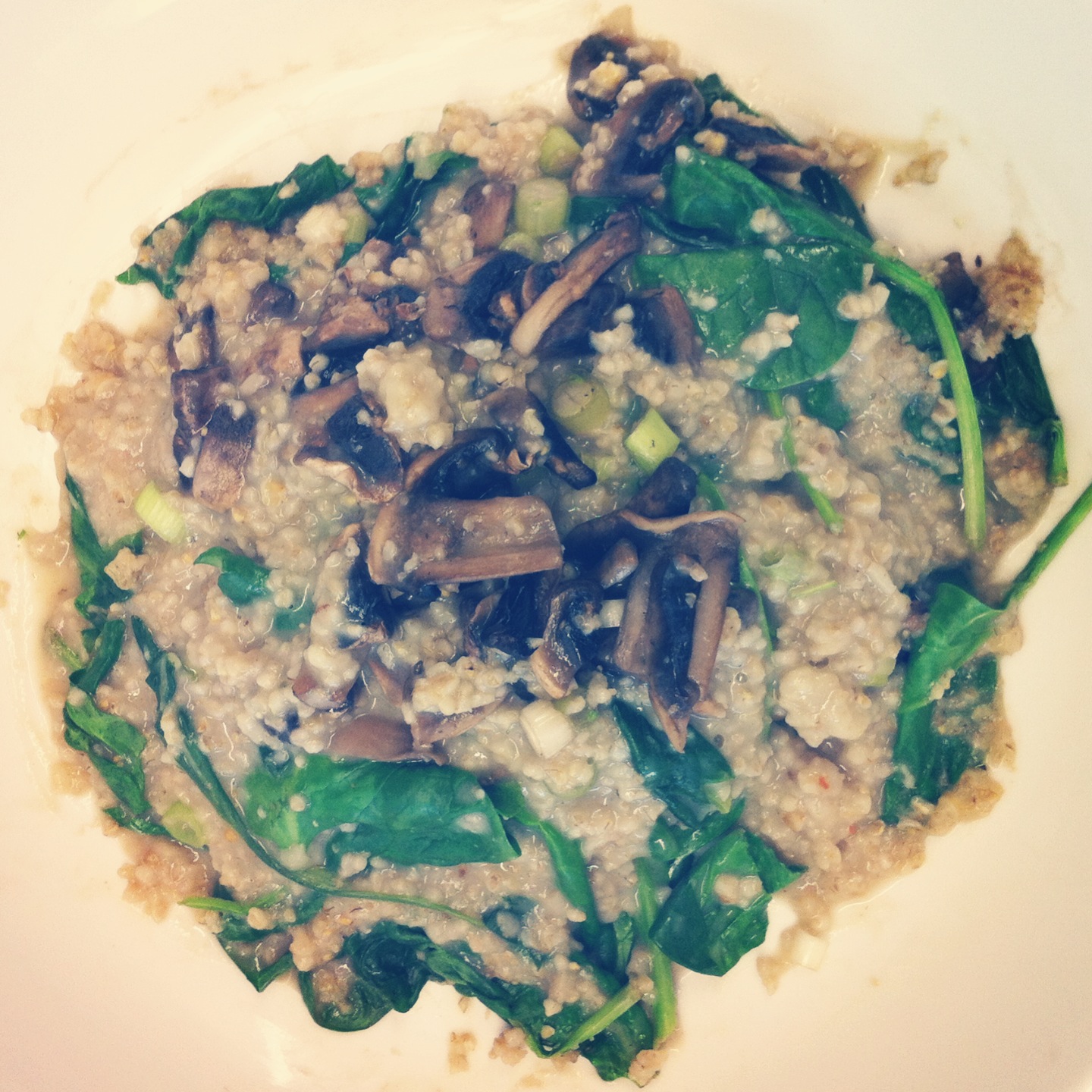
As we weren’t feeling up to our usual French feasts, I thought I would bring us a little comfort in the form of Congee. Congee is a type of rice-porridge that is popular in many Asian countries and eaten especially when feeling ill. I gave it a Rude Health twist and switched the rice to The Oatmeal. There are all sorts of different variations of Congee but I kept it simple using chicken stock, fresh ginger, mushrooms and spinach. Savoury porridge may sound a little unusual but this ‘Oatmeal Congee’ was really comforting and delicious. Here is the recipe I used (I use very rough measurements so adjust to your taste):


Aside from our holiday not being quite what we expected, our spirits were not dampened. We had a fantastic time together and there was at least, some warmer weather! 


Until next time...

Wednesday, 20 March 2013

The Organic Journey


Last month I visited Biofach, the world's biggest organic food and wellness fair, in Nuremburg. It's my favourite trade show as I get to meet many old friends and suppliers and find new sources of inspiration from people who more often than not understand the value of growing and producing sustainable good energy food.

Every year I go and every year I evolve my understanding of how to source, make and sell the right food, food that sustains us and sustains the planet. And I use this information to inform and guide decisions we make at Rude Health.

My first train of thought is all about the value of organic and the meaning of organic: when we started the business it was relatively easy to create an organic food business in the UK, because consumers would pay a premium for what was seen as a worthwhile kite mark. Now, in the UK, they will not. In fact there's been a backlash against organic, and many retailers will actively select foods that are not organic, particularly if they already have an organic equivalent in their selection - whether it's good food or not. The press, big food, even the government have had a high old time quashing any health and nutritional claims for organic foods…and, to make matters worse, the Soil Association and the more recently established Organic Trade Board, rather than focusing on nutritional research,  send out an endless chain of fluffy and confusing messages about the meaning of organic. There's a strong chance that when you ask a Swiss citizen what organic food provides, they're likely to reply: 'sustainable farming'. Ask many a British yummy mummy and they they're more inclined to think a while before coming up with a confusing and conflicting raft of health, taste, welfare and personal claims. 

My second series of thoughts are all about good nutrition and good provenance: since when should an organic pop tart be allowed to be sold as organic? Why can milk be sold as organic when it has being processed to oblivion and its good fats pulverised? How is it that a Chorleywood process loaf of sliced brown bread be labelled organic just because it contains highly refined flour of an organic origin, probably from Canada or even worse, from far way Australia? Who can justify selling organic snap peas in December from East Africa grown using wholly unsustainable ancient ground water? What regulatory organisation would condone issuing derogations in an instant to allow the use of conventional seed grain for organic arable farming? Did you know that despite all the cost and effort and paperwork  around being organic certified came to nothing when there was an oat contamination scandal a few years ago - when, would you believe it - the regulators could not trace the producer...

It's no surprise therefore, that I've now come to approach the sourcing of food with a more realistic understanding of who to trust and what's important. 

I look for foods that come from a sustainable, local (at worst regional) sources, from farmers or primary processors I can meet in person and get to know their practices, that grow and produce food that's not been chemically treated, contains no preservatives, is not fortified, is not refined or over-processed, is not extruded and is not sweetened with some sneaky sugars such as fruit juice, barley malt or fruit infusions. If the best tasting foods I find meet these criteria and are affordable and are also organic certified, then I'll choose them. If they're not organic certified but meet the above criteria, then I'll consider them too. I do not compromise on these values.

This is why we switched SuperFruity Muesli, No Flamin' Raisins Muesli, Morning Glory Porridge and Fruity Date Porridge from organic to conventional recently.  We've not raised our prices for these foods for years. Why not? We can't! If we do, we'll lose sales catastrophically. If we cheapen the ingredients we'll lose our faith and our values and our customers. So, we took the decision to maintain and indeed at times to reduce our prices by sourcing some of the ingredients without organic certification. All the ingredients come from the same suppliers and growers and many of the ingredients remain organic. All meet the criteria above. Many of the ingredients are now of better quality as we can choose our ingredients more widely from the same supplier/region.

You will also see that in our range of breakfast foods, a high percentage remain and will always be organic certified (and award winning too). This includes 2 granolas, 2 mueslis and 3 porridge - that's more than any other well distributed producer. This year we will be launching more new organic foods and drinks than conventional. 
                   So there we go, my rambling rant is over, and if you'd like to contribute   
                   to the debate, please come and rant with us at the Abergavenny food festival
                   this year!

                  For some further reading I highly recommend:

                  This NYT article inspired by pioneering farmers and growers:

                  http://www.nytimes.com/2012/10/14/magazine/californias-central-valley-land-of-a-   
                  billion-vegetables.html?WT.mc_id=NYT-I-P-FOOD-MAG-101412-L1&_r=0

                  Or the evangelical logic of Joel Salatin:

                  http://www.amazon.co.uk/Folks-This-Aint-Normal 
                  Healthier/dp/0892968192/ref=sr_1_1?ie=UTF8&qid=1339393890&sr=8-1


Thursday, 21 February 2013

Eyes & Ears: Episode 1

I spend my days here at Rude Health supporting our smaller independent shops.  I basically do all the fun stuff, which includes roaming around London tracking down the next best deli and health store, sampling our delicious foods, as well as spying on other foods. Whilst the others are glued to their desks, I have become what I like to call our ‘eyes and ears’.

As Londoners we tend to stick to our own areas and local favourite cafés and shops. I get to go to every neighbourhood discovering the best independent shops & cafés that London has to offer.  It seems only fair I share them with you too. So go on, check them out. Variety is the spice of life after all.

MinkiesDeli
First on my list is this very cool little deli in Kensal Rise. They are open for breakfast, lunch and dinner so there’s no excuse not to visit. The fact that they serve Rude Health porridge and granola is proof of their impeccable taste.  They also make beautiful hampers that you can put together yourself for any occasion. 
They are @minkiesdeli on Twitter. Or find them on Facebook.


Niven’s
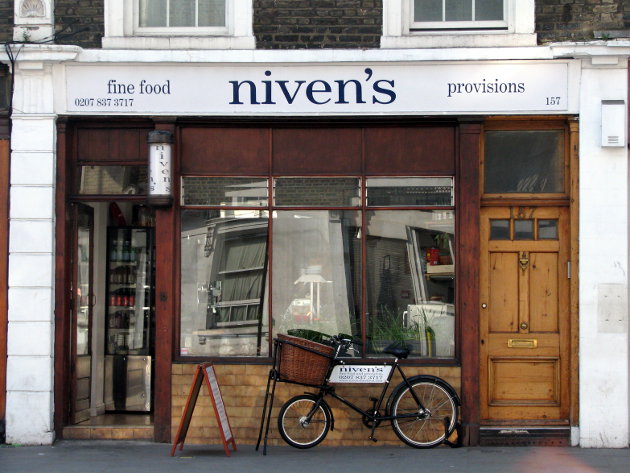
I am very jealous of anybody that works near Kings Cross. My packed lunch just doesn’t compare to all the delicious street food available in the area. Niven’s really stands out from the crowd though with Niven himself dishing up freshly prepared breakfasts (including Fruity Date Porridge & Berry Granola) and lunches using only what’s in season.  Follow them @nivensfood on twitter to find out what’s on the menu today.
  
Alara’s Health Store & Organic Café
This isn’t just any little health store in Holborn. Aside from their very up-to-date range of foods and beauty products they offer a stunning array of international vegetarian and vegan lunches.  If you like the sound of a chickpea and spinach korma or a vegetarian lasagne for lunch, you must check this place out. They do a lot of samplings too, so I can guarantee that you won’t leave hungry.
Find out what's for lunch on Facebook . Or follow @alarashop on twitter.
I’ll be back with more places to discover soon. In the meantime if you’re a shop in London and would like me to come and sample our food then get in touch: tanita@rudehealth.com

Thursday, 31 January 2013

How to make Oatmeal Porridge...


Not all porridge is created equal. Yes oatmeal does take a little more time and effort than porridge flakes, but it's worth it. Once you've tasted the comforting, rich, oaty smoothness, and felt the generous, sustaining energy from a bowl of well-made oatmeal, you'll be hooked. 

Why does it take longer to prepare? Because oatmeal is not a flaked grain. Unlike the steamed and rolled quick oat flakes - a late 19th Century invention - oatmeal is the oat groat (grain) cut into 3 (pinhead) or crushed (coarse/medium/fine grades). The Oatmeal has a blend of organic steel cut pinhead and medium oatmeal.

Cooked with water and sea salt, oatmeal porridge is the original oat porridge and with a little help from traditional methods and some practice it's easy and quick to make.

1. I begin in the time honoured way with an evening ritual, for which you'll need oatmeal, water, kettle, a bowl and a measuring cup - this one is 100ml. Here I'm making enough for Max (7), me and Camilla


2. Pour about 150ml of oatmeal into a bowl - making porridge is not a precise process


3. Warm some water, so it's tepid, not scalding. Add about 200ml of the warm water to the oatmeal and mix well. It'll look like a rich soup. Take a moment to smell your soaking oatmeal - it should have a wonderful, soothing velvety aroma. Put to one side overnight covered with a plate. Don't worry about where you put it - it doesn't need any more warmth.


4. By the next morning your soup will have set - the oatmeal has soaked up most of the water, and in doing so is now ready for cooking in less than 5 minutes.


5. Boil about 200ml of water with two pinches of good quality sea salt, and then tip in the soaked oatmeal and stir. Turn the heat down a little and let the oatmeal come to a simmer, stirring from time to time. At first the oatmeal will look very watery, but within moments it will begin to thicken as the grains soak up yet more water.


6. Reduce the heat so that oatmeal bloops and pops a little. With confidence and a low heat, you can put the lid on and let the oatmeal steam. For now, leave the lid off, and after a minute or so, taste for salt, and if the oatmeal is too thick add a little water at a time, and if you need salt add it now too, and then taste again after a good stir.


7. Keep stirring and tasting, checking for texture, bite, and saltiness. I like my oatmeal with a subtle hint of salt and a nourishing rich texture that I can pour slowly from the pan into a bowl.


Max and Camilla have maple syrup with theirs, and I like Irish apple syrup and a sprinkle of bee pollen. A melty topping of coconut oil or some home made ghee is good too. However we all like Guernsey raw cream from Hurdlebrook…Max and I share a bowl of this custard like luxury and take a scoop of the cold cream with a spoonful of oatmeal. Such a simple yet exquisite pleasure that's rooted in a crofting tradition: cream from the milk cow to share in the centre of the family breakfast table, and a bowl of oatmeal each. Perfect.


I'll be taking The Oatmeal to the The Golden Spurtle (World Porridge Championship) this year. In 2011 and 2012 it secured me a place in the final. This year I intend to win with it. Practice makes perfect.